





What is SIR (Special Intensive Revision)?
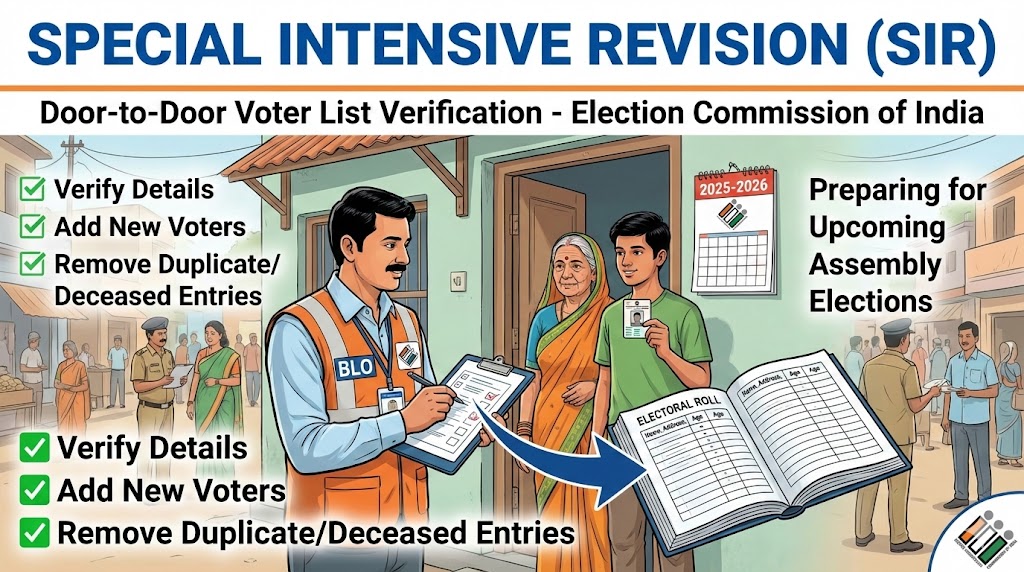
SIR, or Special Intensive Revision, is an exercise conducted by the Election Commission of India (ECI) to ensure electoral rolls are accurate, up-to-date, and inclusive. The process aims to verify that all eligible Indian citizens are included in the electoral rolls while ensuring no ineligible voters remain registered.
The nationwide SIR process was announced on October 27, 2025, by Chief Election Commissioner Gyanesh Kumar. The Election Commission has the constitutional authority under Article 324 and Section 21(3) of the Representation of the People Act, 1951, to conduct this revision without prior permission from any authority.
How Does SIR Work?
The SIR process involves comprehensive door-to-door verification by Booth Level Officers (BLOs) who check voter details and documentation. During this process, voters need to submit proof of identity and citizenship.
Documents Required for SIR Verification
Notable documents excluded from proof of citizenship include voter ID cards, Aadhaar cards, ration cards, driver’s licenses, and PAN cards. These are issued based on residency rather than citizenship, and some can even be held by foreign nationals.
Acceptable documents for citizenship verification include:
- Indian passport
- Birth certificate
- Naturalisation certificate issued by the Home Ministry
- Nationality certificate from the court or government
- Educational certificates
- Permanent residence certificate
- Government-issued land or house allotment documents
- Caste certificates (OBC/SC/ST)
- Family registers prepared by local authorities
Why is SIR Important?
1. Electoral Integrity
SIR ensures that only eligible Indian citizens participate in the democratic process. By verifying voter identities and removing duplicate or ineligible entries, the process strengthens the foundation of India’s electoral system.
2. Accurate Voter Lists
The commission has cited concerns that several voters in certain states had obtained voter identity cards using dual documents. SIR helps identify and remove such irregularities, ensuring one person equals one vote.
3. Legal Compliance
The process helps identify individuals who may need to regularize their citizenship status. For instance, foreign nationals married to Indian citizens who have been living in India can apply for naturalization if they meet the 12-year residency requirement.
4. Transparency and Accountability
SIR provides a systematic, documented process for voter verification, making the electoral system more transparent and accountable to all stakeholders.
5. Updated Records
With rapid urbanisation, migration, and demographic changes, regular revisions ensure electoral rolls reflect current realities rather than outdated information.
Why is SIR Trending in India?
Verification of Foreign Nationals
The ECI planned SIR ahead of the 2026 Assembly elections, citing concerns about illegal immigrants from neighbouring countries who had obtained voter identity cards. The focus on verifying citizenship status has made SIR a major topic of national discussion.
Scale of Implementation
Phase-II of SIR launched on November 4, 2025, covering about 51 crore electors across 321 districts and 1,843 Assembly constituencies in 9 states and 3 union territories. This massive exercise affects millions of Indian voters.
Political Discourse
The SIR exercise has become part of broader political debates about immigration, citizenship, and electoral integrity. Different political parties have expressed varying views on the necessity and implementation of the process.
Media Coverage
Extensive media reporting on the SIR process, particularly stories about its impact on border communities and foreign nationals living in India, has brought the issue into public consciousness.
Border State Focus
States like Bihar, West Bengal, Assam, Tamil Nadu, Kerala, and Puducherry are undergoing SIR, particularly in regions near international borders where cross-border migration is more common.
Impact on Communities
In certain border districts, many voters declared ineligible were foreign nationals, particularly women who moved to India after marrying local residents. These human interest stories have garnered significant attention.
Digital Verification Process
The modernisation of the SIR process with online form submission, digital verification, and systematic documentation has made it more visible and accessible to the public.
Key Statistics and Facts
- In January 2025, when verification of Bihar’s voter list was completed, the Election Commission did not find a single foreign national initially
- Foreign nationals account for less than 0.012% of Bihar’s voters, according to SIR findings
- The process involvesthe verification of approximately 7.89 crore individuals across multiple states
- In the Chennai district, more than 40% of residents have been covered in the enumeration exercise
How to Participate in SIR
Citizens can participate in the SIR process by:
- Responding to BLO Visits: Cooperate with Booth Level Officers during door-to-door verification
- Online Form Submission: Fill out enumeration forms online through the official ECI portal
- Document Preparation: Keep the required citizenship and identity documents ready
- Verification: Submit one or more acceptable documents proving Indian citizenship
- Objections: File objections to the exclusion or inclusion of any voters if discrepancies are found
Addressing Concerns
For Indian Citizens
Many Indian citizens initially deemed ineligible have been able to correct their status by submitting proper documentation. The process allows for objections and corrections.
For Foreign Nationals
Foreign nationals living legally in India who may have been inadvertently registered as voters can regularise their status. Those married to Indian citizens and meeting residency requirements can apply for naturalisation.
For Privacy
The SIR process is conducted by authorised government officials and follows legal protocols to protect personal information while ensuring electoral integrity.
Conclusion
The Special Intensive Revision represents a significant effort by India’s Election Commission to modernize and strengthen electoral rolls. While the process has sparked debate and required adjustments, it aims to ensure that India’s democratic process remains robust, transparent, and representative of its actual citizenry.
As the exercise continues across multiple states, understanding SIR becomes essential for every eligible voter in India. Whether you’re verifying your own details or helping family members navigate the process, being informed about SIR requirements and procedures ensures smooth participation in India’s democratic system.
Stay Updated: Check your voter registration status regularly and ensure your details are accurate before upcoming elections in your state.